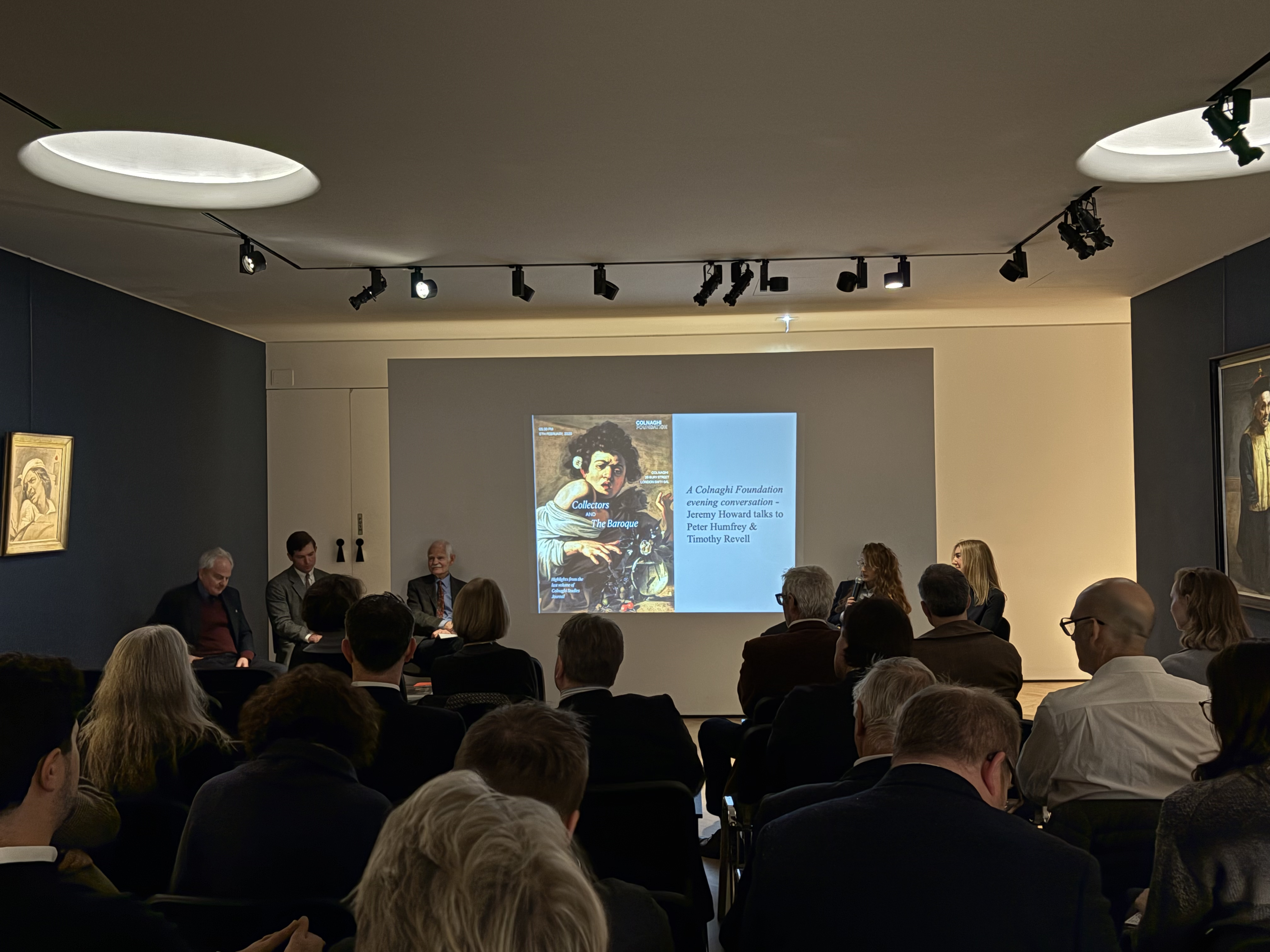
On 5 February 2026, the Colnaghi Foundation hosted an evening panel discussion at 26 Bury Street, London, in connection with Issue 17 of the Colnaghi Studies Journal. The discussion was structured around two essays published in the volume, by Peter Humfrey and Timothy Revell, both of which address the reception of Baroque art through the history of collecting.
Peter Humfrey’s essay, Collecting pictures for a Georgian villa: the Earls Harcourt at Nuneham, examines the formation and display of the Harcourt collection at Nuneham Courtenay in the mid-eighteenth century. Drawing on archival material and surviving inventories, Humfrey reconstructs the arrangement of the picture gallery and considers how Italian paintings were understood within the setting of an English country house. The essay pays particular attention to the role of architecture and display, including the use of classical ornament and ‘carlomaret’ frames, in shaping the reception of works by artists such as Titian, Poussin, Rubens, and Salvator Rosa. Humfrey shows how Baroque painting occupied an uneasy position within Georgian taste, admired for its pictorial qualities yet often filtered through a classical lens that sought to discipline or reframe its perceived excess.
Timothy Revell’s contribution, The Collecting of Art Under the Lens: The Art of Discovery, focuses on the collection of Dr Carlo Croce and on the processes through which Baroque paintings have been rediscovered and re-evaluated in the modern period. Revell’s essay is concerned less with eighteenth-century display than with twentieth-century institutional collecting, particularly in relation to Caravaggio. Using the case of Boy Bitten by a Lizard and its shifting attribution history, Revell traces how changing scholarly attitudes, museum acquisitions, and individual collectors contributed to the gradual rehabilitation of Caravaggio and other Baroque artists. The essay situates this revival against earlier critical resistance to the Baroque, including Victorian and early modernist hostility, and reflects on the decisive role played by American museums and collectors in reshaping the period’s status.
Moderated by Candida Lodovica Chi with contributions from Irene Brooke and Jeremy Howard, the panel placed the two essays in dialogue, drawing attention to the long and uneven history through which the Baroque has been interpreted, collected, and valued.
Back to News
Collectors and the Baroque: Highlights from the Latest Volume of the Colnaghi Studies Journal
On 5 February 2026, the Colnaghi Foundation hosted an evening panel discussion at 26 Bury Street, London, centred on two essays from Colnaghi Studies Journal 17 by Peter Humfrey and Timothy Revell. The discussion examined the reception of Baroque art through the history of collecting, from eighteenth-century British country houses to modern institutional and private collections, tracing how taste, attribution, and critical judgment have shaped the Baroque’s changing status over time.